
Advanced PTBD Treatment for Obstructive Jaundice (Piliya) at Dayal Intervention and Imaging
At Dayal Intervention and Imaging, we offer advanced Percutaneous Transhepatic Biliary Drainage (PTBD), a minimally invasive image-guided procedure used to relieve blockage in the bile ducts and treat obstructive jaundice (Piliya).
When bile cannot flow normally from the liver to the intestine due to a blockage, it accumulates in the body, causing jaundice and other serious complications. PTBD helps restore bile flow, reduce bilirubin levels, relieve symptoms, and improve liver function without the need for major surgery.
Our experienced Interventional Radiologists perform PTBD using advanced imaging guidance to ensure precision, safety, and faster recovery.
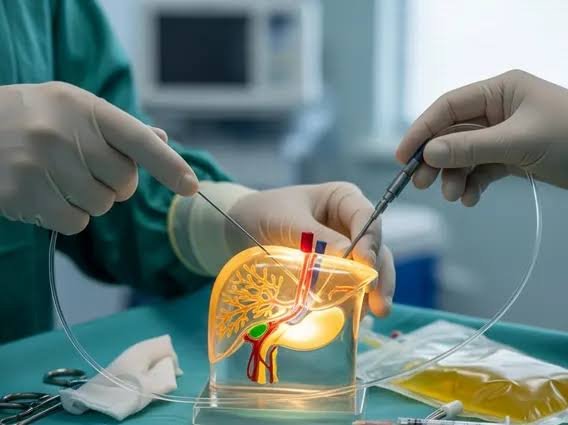
Percutaneous Transhepatic Biliary Drainage (PTBD) is a minimally invasive procedure that drains bile from the liver when the normal bile ducts are blocked.
Using ultrasound and fluoroscopic (X-ray) guidance, a thin needle is inserted through the skin into the liver, followed by placement of a drainage catheter into the blocked bile duct.
This allows bile to drain either externally into a collection bag or internally into the intestine, depending on the patient’s condition.
PTBD is widely performed worldwide as an effective treatment for biliary obstruction.
However, it is important to understand that not all jaundice is treated with PTBD.
PTBD is recommended when jaundice occurs due to blockage of the bile ducts (Obstructive Jaundice).
By relieving the blockage, PTBD reduces bilirubin levels, improves liver function, and helps patients feel better before further treatment.
Clear, step-by-step instructions to ensure a safe procedure and a smooth, comfortable recovery process.
Important steps to take prior to your scheduled procedure to ensure optimal safety.
Post-procedure guidelines to manage your catheter and promote healthy healing.
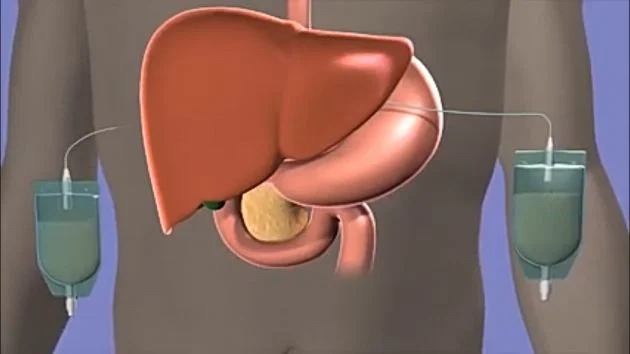
Percutaneous Transhepatic Biliary Drainage (PTBD) is a crucial intervention used to relieve bile duct obstructions and restore normal biliary flow.
Relieving blockages caused by tumors or advanced structural lesions to improve liver function and patient comfort.
Managing structural issues, injuries, or inflammatory blockages completely unrelated to cancer cells.
The procedure is performed under local anesthesia and, when appropriate, sedation. Most patients experience only mild discomfort.
It usually takes 30 to 90 minutes, depending on the patient’s condition.
PTBD treats obstructive jaundice by relieving the bile duct blockage. It does not treat jaundice caused by liver diseases such as hepatitis or cirrhosis.
Many patients stay for observation for a short period, although the exact duration depends on their condition and the treating doctor’s advice.
For many patients, PTBD is a less invasive alternative to surgery and may be preferred when surgery is not immediately possible or carries higher risks. Your doctor will recommend the most appropriate treatment based on your condition.
If you or your loved one has been diagnosed with obstructive jaundice (Piliya) or a blocked bile duct, timely treatment is essential to prevent complications and improve recovery.
Book your consultation today and take the first step toward effective treatment and better liver health.

At Dayal Intervention & Imaging, we are committed to providing advanced and accurate diagnostic solutions under one roof. With state-of-the-art equipment and expert radiologists, we ensure precise results for better treatment outcomes.
CA-31, Front of Patliputra Sports Complex, Kankarbagh, Patna – 20
Copyright © 2025 Dayal Intervention & Imaging. Designed & Developed by CMSH Technology